Escape WordPress Plugin Chaos: 5 Reasons All-in-One Platforms Like New Zenler Win
 Niraj Kumar
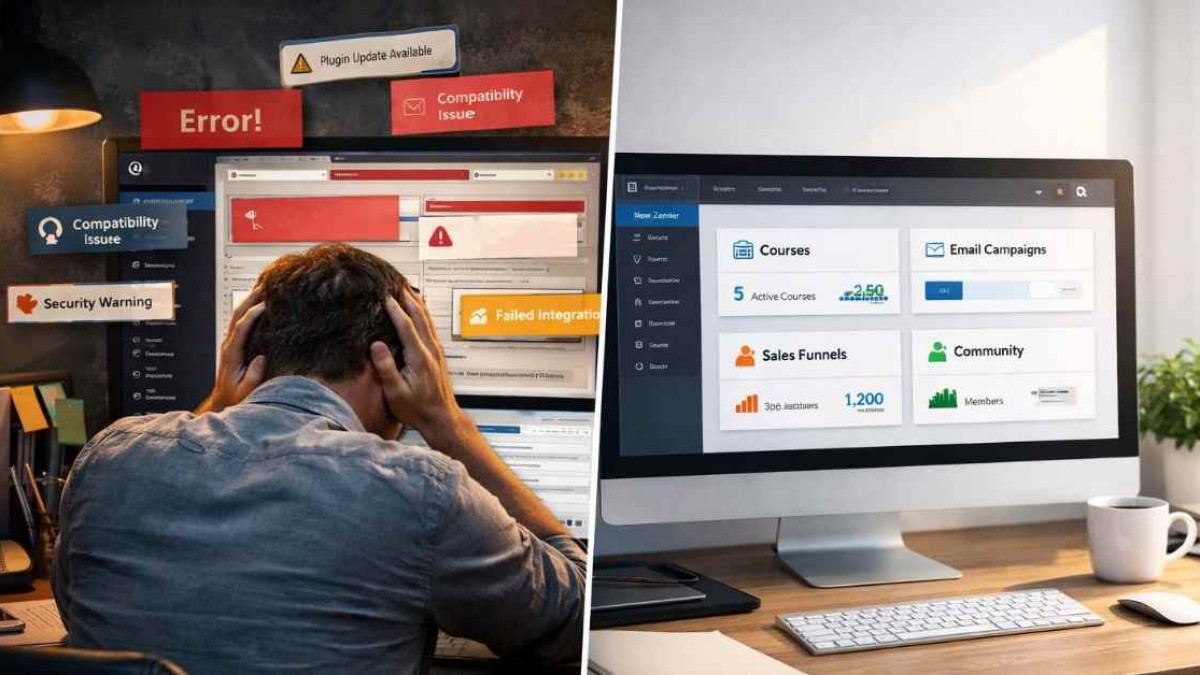
Struggling with WordPress plugin overload? Discover 5 powerful reasons why all-in-one platforms like New Zenler outperform plugin-heavy setups.
Introduction: The WordPress Plugin Paradox – Power or Pain?
WordPress, the undisputed king of website builders, offers unparalleled flexibility. Its vast ecosystem of plugins promises to extend functionality, automate tasks, and empower creators with nearly limitless possibilities. This initial allure of power is undeniable. However, for online business owners, especially those building communities, courses, and content empires, this flexibility often morphs into a labyrinth of complexity. The promise of apps and services to streamline operations can quickly devolve into a fragmented, resource-draining nightmare. Managing dozens of plugins, each with its own updates, compatibility issues, and subscription fees, becomes a full-time job, diverting precious energy away from core business growth. The workflow integrations required to make these disparate tools communicate are often fragile, leading to constant troubleshooting and missed opportunities. This is the WordPress plugin paradox: unparalleled potential for power that, when unmanaged, becomes a significant source of pain. As the online learning market expects to hit $350 billion in 2025 [Teachfloor Blog, 2023], the need for efficient, integrated solutions has never been greater. The All-In-One Marketing Platform Market, valued at approximately USD 10 billion in 2023 and projected to reach USD 45 billion by 2033, further underscores the shift towards consolidated services [Datahorizzon Research, 2023].
The Allure of WordPress: Flexibility and Freedom
At its heart, WordPress is a robust content management system built on open-source principles. This foundation allows for incredible customization, making it a go-to platform for bloggers, small businesses, and entrepreneurs alike. The sheer number of available plugins is staggering, offering solutions for everything from e-commerce and SEO to membership sites and social media management. This vast library means that theoretically, any feature imaginable can be added to a WordPress site. For many, this freedom to choose and implement specific functionalities is the primary reason for its widespread adoption. It allows for a tailored approach, where users can pick and choose the exact apps and services they need, often starting with free or low-cost options. This initial approach can feel empowering, allowing creators to build their online presence piece by piece.
The Inevitable Evolution: When "Flexibility" Becomes "Fragmented Chaos"
While the initial flexibility of WordPress is appealing, its growth often leads to an unwieldy collection of plugins. What starts as a few essential apps can balloon into dozens, each requiring individual attention. This is where the paradox truly manifests. Every new plugin adds another layer of potential conflict, another update to manage, and another security risk to mitigate. The time and resources once saved by choosing WordPress can quickly be consumed by the need to maintain it. This constant tinkering, troubleshooting workflow integrations, and dealing with update cycles erodes focus. For creators aiming to build comprehensive online courses or nurture vibrant communities, this fragmentation becomes a significant barrier. The seamless workflow envisioned can become a disjointed and frustrating experience for both the creator and their audience.
A Better Way Forward: Embracing All-in-One Solutions Like New Zenler
The challenges posed by fragmented plugin architectures have paved the way for a new generation of platforms designed to consolidate essential business functions. All-in-one solutions, such as New Zenler, offer a compelling alternative by bringing website building, course creation, email marketing, sales funnels, and community management under a single, unified umbrella. This approach eliminates the need for complex workflow integrations and reduces the overall technical overhead. Instead of juggling multiple apps and services, creators can leverage a single, cohesive ecosystem that is designed to work seamlessly together. This shift represents a fundamental change in how online businesses can operate, prioritizing efficiency, reliability, and a superior user experience.
What You'll Learn: The 5 Core Advantages of a Unified Platform
This article will explore five key advantages of adopting an all-in-one platform like New Zenler over a traditional WordPress plugin-heavy approach:
- Seamless Integration and Unified Workflow: Discover how a single platform streamlines operations and eliminates plugin conflicts.
- Enhanced Reliability, Security, and Performance: Understand the peace of mind that comes with enterprise-grade solutions.
- Simplified Learning Curve and Effortless Management: Learn how to spend more time creating and less time configuring.
- Predictable Costs and Scalable Growth: Explore transparent pricing and a platform built to grow with your ambition.
- A Truly Holistic Customer Experience: See how unified systems create engaging journeys for your audience.
The Tangled Web of WordPress Plugins: Why Chaos Ensues for Online Business Owners
The initial promise of WordPress is its adaptability, allowing business owners to select specific plugins to meet their unique needs. However, this modularity often becomes a double-edged sword. As businesses grow and their needs evolve, the plugin count on a WordPress site tends to increase. This creates a complex web of dependencies, where the functionality of one plugin relies on another, and a conflict in one can cascade across the entire site. For creators, this means spending an inordinate amount of time managing, updating, and troubleshooting these individual apps and services, detracting from their core mission of creating valuable content and engaging with their audience. In fact, a staggering 52% of WordPress vulnerabilities relate to WordPress plugins [Kinsta, 2025], and some sources indicate that 90% of WordPress vulnerabilities originate from plugins [WordPress Vulnerabilities Database, 2025], highlighting the significant security risks involved.
The Hidden Costs Beyond the "Free" Plugin
Many users are drawn to WordPress by the availability of free plugins, assuming they are a cost-effective solution. However, the reality is often quite different. The initial "free" plugin might require premium add-ons for essential features, leading to a creeping accumulation of subscription costs across multiple apps. Beyond direct monetary expenditure, the time spent configuring, troubleshooting, and managing these plugins represents a significant, often overlooked, cost. The average cost for professional website maintenance can range from $200 to $4,500 per month [Hostinger, 2025], and this figure can skyrocket when a complex plugin ecosystem requires constant attention from developers or dedicated IT personnel. This drain on resources and time can severely hamper business growth, especially for solopreneurs or small teams.
The Peril of Performance and Security Vulnerabilities
Each plugin added to a WordPress site introduces potential performance bottlenecks and security vulnerabilities. When multiple plugins are active, they compete for server resources, leading to slower page load times. This can negatively impact user experience, conversion rates, and even SEO rankings. Furthermore, outdated or poorly coded plugins can create significant security holes. Wordfence reported blocking a whopping 159 billion password attack requests on WordPress sites in 2022 alone [AIOSEO, 2025], illustrating the constant threat landscape. Relying on numerous plugins means relying on the individual developers to maintain security patches, a task not always consistently performed, leaving your site exposed. This constant battle to keep a WordPress site secure and performing optimally is exhausting and can lead to costly breaches or downtime.
Compatibility Nightmares: The Endless Update Cycle
One of the most persistent frustrations for WordPress users is the constant need to update plugins. Developers release updates to fix bugs, improve performance, and patch security vulnerabilities. While necessary, this update cycle can quickly become a nightmare. A new update for one plugin might conflict with another, breaking previously functional features. This often necessitates reverting to older versions, disabling plugins temporarily, or spending hours researching compatibility issues. For creators, this means precious time that could be spent creating courses or engaging with their community is instead dedicated to technical maintenance. The workflow integrations that were painstakingly set up can be broken by a single update, forcing a rebuild.
Disjointed Data and Fragmented Learning Moments
When business functions are spread across numerous plugins, data becomes siloed and fragmented. Tracking customer journeys, understanding user behavior, and analyzing campaign performance becomes a complex and often incomplete puzzle. This lack of unified data hinders effective decision-making and personalization. For online course creators, this fragmentation is particularly detrimental to the learning experience. Different plugins for course delivery, student management, and community interaction can lead to inconsistent user interfaces and disjointed learning moments. Students may encounter different login procedures, varied navigation systems, and disconnected communication channels, diminishing the overall impact of the learning experience and reducing the memorable moments that foster engagement and retention.
Reason 1: Seamless Integration and Unified Workflow (Goodbye, Plugin Conflicts!)
The most compelling reason to transition from a fragmented WordPress setup to an all-in-one platform like New Zenler is the profound benefit of seamless integration and a truly unified workflow. Instead of relying on numerous third-party apps and services that require intricate workflow integrations, a consolidated platform offers all core functionalities within a single ecosystem. This dramatically simplifies operations, reduces the potential for conflicts, and allows for a more cohesive and efficient business process.
All Core Business Functions Under One Roof
An all-in-one platform consolidates essential business functions that would typically require multiple WordPress plugins. This includes website building, landing page creation, email marketing automation, course hosting, membership management, e-commerce capabilities, and community forums. For example, instead of separate plugins for e-commerce, course delivery, and email opt-ins, New Zenler offers these features natively. This means you’re not managing separate dashboards, struggling with varying user interfaces, or dealing with the complexities of making disparate systems talk to each other. Everything needed to run and grow an online business is accessible from a single control panel, creating a streamlined environment.
The Power of a Cohesive Workflow
The true power of an integrated platform lies in its ability to create a cohesive workflow. Imagine a customer purchasing a course: in a plugin-based system, this involves interactions between an e-commerce plugin, a user registration system, an email notification service, and a course access manager, all potentially from different providers. In an all-in-one solution, this entire process is managed seamlessly within the platform. When a sale is made, the system automatically grants access to the course, enrolls the student in relevant email sequences, and updates customer data – all without manual intervention or complex workflow integrations. This unified approach ensures a smooth, professional experience for the customer and significantly reduces operational overhead for the business owner.
Centralized Data for Smarter Decisions and Enhanced Customer Insights
One of the most significant advantages of a unified platform is centralized data management. Instead of data being scattered across multiple plugins and databases, an all-in-one system collects all customer interactions, sales data, course progress, and marketing engagement within a single repository. This holistic view provides invaluable insights. You can easily track a customer's journey from their first website visit to their completion of a course, understand which marketing efforts are most effective, and identify opportunities for upselling or cross-selling. This centralized data is the foundation for making smarter business decisions, personalizing customer experiences, and optimizing marketing campaigns, especially for advertising.
Reason 2: Enhanced Reliability, Security, and Performance (Peace of Mind Included)
When operating an online business, reliability, security, and performance are not mere conveniences; they are foundational requirements for success. The fragmented nature of managing multiple WordPress plugins often compromises these critical aspects. An all-in-one platform, by contrast, is engineered as a complete solution, offering robust protections and optimized performance without the constant need for individual maintenance and troubleshooting.
Enterprise-Grade Security Without the Effort
Managing security across a WordPress site with numerous plugins is a monumental task. Each plugin represents a potential attack vector. The responsibility for patching vulnerabilities often falls on the individual plugin developer, and not all do so promptly or effectively. An all-in-one platform typically invests heavily in enterprise-grade security measures, managed centrally. This includes regular security audits, firewalls, malware scanning, and proactive threat detection. For instance, by consolidating your services into one platform, you reduce the attack surface significantly, making it much harder for malicious actors to exploit vulnerabilities. This provides invaluable peace of mind, knowing your business and customer data are protected by a dedicated security infrastructure.
Blazing Fast Speeds for a Superior User Experience
Website speed is a critical factor in user experience and search engine rankings. A WordPress site laden with multiple plugins, especially those that are not optimally coded, can suffer from slow loading times. This can lead to high bounce rates and lost sales. All-in-one platforms are typically built with performance optimization as a core consideration. They are designed to serve content efficiently, often employing advanced caching mechanisms and optimized codebases. This ensures that your website, course pages, and sales funnels load quickly, providing a smooth and professional experience for your audience, which is crucial for keeping them engaged and increasing learning moments.
Automatic Updates and Rock-Solid Stability
The constant update cycle of WordPress plugins can be a major source of instability and frustration. A single faulty update can bring down your entire website. All-in-one platforms usually handle updates automatically and efficiently within their integrated system. Because all components are designed to work together, updates are tested rigorously to ensure compatibility, maintaining rock-solid stability. This means you can rely on your platform to be consistently available and functional, allowing you to focus on your business rather than worrying about technical glitches. This stability is essential for delivering uninterrupted learning and maintaining audience trust.
Reason 3: Simplified Learning Curve and Effortless Management (More Creation, Less Configuration)
For many entrepreneurs and content creators, the technical demands of managing a complex WordPress setup are a significant barrier to entry and a constant drain on productivity. An all-in-one platform dramatically simplifies the learning curve and day-to-day management, allowing users to focus on what they do best: creating content, marketing their offerings, and engaging with their audience.
Intuitive Interface for Quick Setup and Adoption
All-in-one platforms are designed with user-friendliness in mind. They typically feature intuitive interfaces that guide users through setup and daily operations. Instead of navigating multiple plugin settings, users interact with a single, cohesive dashboard. This makes it easier to create landing pages, set up sales funnels, build courses, and manage email lists without requiring extensive technical expertise. For creators transitioning from a WordPress site, this simplification is often a revelation, drastically reducing the time spent on configuration and technical tasks. This ease of use contributes to a more enjoyable and productive workflow.
Dedicated Support and a Thriving Community
When technical issues arise with a WordPress site, finding reliable support can be challenging, often requiring you to track down the specific plugin developer. All-in-one platforms typically offer dedicated customer support, providing a single point of contact for assistance. Furthermore, many of these platforms foster active communities of users. For example, individuals who resonate with the principles taught at the School of Podcasting, or aspire to Profit From Your Podcast Book, can find immense value in a supportive platform community. This peer-to-peer support system, coupled with official assistance, ensures that help is readily available, making the journey smoother and facilitating the creation of impactful learning moments.
Focus on Your Core Business: Content, Marketing, and Students
The most significant benefit of a simplified management experience is the ability to redirect time and energy back to core business activities. Instead of wrestling with plugin compatibility or troubleshooting technical glitches, creators can dedicate their focus to developing high-quality course content, refining marketing strategies, and engaging directly with their students. This shift is crucial for growth and for delivering exceptional value. When you're not bogged down by technical overhead, you have more capacity for storytelling in your marketing, creating more compelling advertising, and ultimately, nurturing a more engaged audience and fostering richer learning experiences.
Reason 4: Predictable Costs and Scalable Growth (No Surprise Bills)
The financial aspect of running an online business can be unpredictable, especially when relying on a multitude of WordPress plugins, each with its own pricing structure, renewal dates, and potential upsells. All-in-one platforms offer a more transparent and predictable financial model, allowing for better budgeting and a clear path for scalable growth.
Transparent, All-Inclusive Pricing Models
Unlike the piecemeal approach of purchasing individual WordPress plugins, all-in-one platforms typically offer subscription-based pricing that bundles a comprehensive suite of features. This means you know exactly what you're paying for and what functionalities are included. There are no hidden fees or unexpected charges for essential features that you discover are missing after installation. This transparency is invaluable for small businesses and solopreneurs who need to manage their budget effectively. This predictable cost structure allows for better financial planning, enabling reinvestment into other areas of the business.
Built to Scale With Your Ambition
As your online business grows, your technology needs will evolve. An all-in-one platform is designed with scalability in mind. As you attract more students, increase your sales volume, or expand your content offerings, the platform can accommodate this growth without requiring you to add or swap out numerous plugins. Higher-tier plans often offer increased capacity for features like email subscribers, course enrollments, or advanced automation services. This ensures that your technology infrastructure can keep pace with your ambition, eliminating the need for a costly and disruptive migration of apps and services as your business expands.
Reinvesting Savings into Business Development
By eliminating the often-substantial costs associated with premium WordPress plugins, their add-ons, and the time spent on maintenance, an all-in-one platform frees up capital that can be reinvested strategically. These savings can be directed towards marketing initiatives, content creation, team expansion, or investing in other growth-driving services. For creators aiming to Profit From Your Podcast Book or build their Wall of Listeners, having a predictable cost structure and predictable system allows for more confident investment in these growth strategies. This financial predictability fosters a more sustainable and accelerated growth trajectory.
Reason 5: A Truly Holistic Customer Experience (From Enrollment to Engagement)
The customer experience is paramount in today's digital landscape. A disjointed online presence, often the result of managing multiple WordPress plugins, can lead to a fragmented and unprofessional user journey. All-in-one platforms excel at delivering a cohesive, branded, and engaging experience that guides customers smoothly from initial interest through to ongoing engagement and loyalty.
Consistent Branding and Professional User Interface
When using various WordPress plugins, maintaining a consistent brand aesthetic and user interface across all touchpoints can be a significant challenge. Different plugins may have distinct design styles, leading to a jarring experience for the user. An all-in-one platform offers a unified design framework, ensuring that your website, sales pages, course content, and community forums all align with your brand identity. This visual consistency enhances professionalism, builds trust, and reinforces your brand message. It ensures that every interaction, from landing on your site to enrolling in a course, feels cohesive and polished.
Seamless Course Consumption and Community Engagement
For online educators and community builders, the student experience is critical. An integrated platform ensures that the transition between consuming course material, interacting with the community, and accessing resources is seamless. Instead of navigating separate logins or clunky interfaces for different functions, students can move fluidly between course modules, discussion forums, and support resources within a single, intuitive environment. This optimized experience minimizes friction, encourages deeper engagement, and fosters memorable learning moments. It ensures that the learning process itself is enjoyable and productive, helping students achieve their goals and creating positive moments they will remember.
This holistic approach extends to communication. Integrated email marketing and notification systems ensure that students receive timely updates, reminders, and personalized follow-ups, enhancing their overall journey and supporting their progress. For those who resonate with the Power of Podcasting Network, imagine how much easier it is to manage your audience when all their interactions with your brand—from listening to your podcast to purchasing a course—are tracked and managed in one place, creating a more complete picture of their engagement.
Conclusion: Embracing Clarity for Sustainable Growth
The allure of WordPress's flexibility is undeniable, offering a powerful foundation for building an online presence. However, for many entrepreneurs and content creators, the journey from a few essential plugins to a sprawling, unmanageable ecosystem leads to significant pain points. The constant struggle with plugin conflicts, security vulnerabilities, performance issues, and fragmented customer experiences diverts critical energy away from core business objectives. This is where all-in-one platforms like New Zenler offer a transformative solution.
By consolidating essential services like website building, course creation, marketing automation, and community management into a single, cohesive workflow, these platforms eliminate the chaos. They provide enterprise-grade security and optimized performance, ensure predictable costs, and offer a simplified management experience, freeing creators to focus on their passion. For individuals deeply involved in areas like podcasting, such as those associated with the School of Podcasting or aspiring to Profit From Your Podcast Book, a unified platform is not just about convenience; it’s about efficiency, impact, and building a sustainable business that can reach its full potential. The ability to leverage tools like Ray Edwards ClarityScribe and other AI tools within this streamlined environment further enhances content creation and storytelling, making your advertising more effective and your overall communication more compelling.
The global SaaS market is projected to hit $300 billion by 2025 [Zylo, 2025], indicating a clear trend towards integrated, cloud-based solutions. Transitioning to an all-in-one platform is an investment in clarity, efficiency, and sustainable growth. It’s about reclaiming your time, enhancing your customer experience, and building the online business you’ve always envisioned, free from the shackles of plugin pandemonium. Embrace the power of simplicity and focus on what truly matters: connecting with your audience and delivering exceptional value.
Why This Matters for Your Business Growth
Choosing the right platform isn't just a technical decision; it's a strategic one. As an E-Learning System Designer, I look at your business through two lenses: how fast we can get you to your first sale, and how easily you can run the show once I’m gone.
🚀 For the Entrepreneur: A 50% Faster Launch
In the digital world, speed is currency. Building a comparable school on WordPress involves selecting, installing, and "styling" at least 10 different plugins to talk to each other. This often takes 4 to 6 weeks of development and testing.
With New Zenler, we aren't "building from scratch"—we are "configuring for excellence." Because the marketing funnels, email automation, and course player are already integrated, we can usually launch your academy 50% faster than a custom WordPress build. This means you start generating ROI while your competitors are still stuck in "development mode."
🎓 For the Coach: Empowered Management
My goal as your Launch Coach is to make sure you aren't "tethered" to a developer for every small change.
- WordPress has a steep learning curve; one wrong click in the backend can "break" a page layout.
- New Zenler features an intuitive, visual "drag-and-drop" builder.
When I hand over a Zenler site, I provide a simple walkthrough. Within an hour, you’ll feel confident uploading new lessons, checking your sales dashboard, and sending out broadcast emails without ever needing to call a tech expert.
The "Bridge" Verdict
"Don't get me wrong—I still love WordPress for high-end custom blogs and complex SEO-heavy sites. It’s a masterpiece of flexibility. But if you want a scalable, high-speed academy that delivers a world-class student experience and lets you sleep at night without worrying about plugin updates—New Zenler is the 2026 winner."
Tired of managing a 'Frankenstein' website? I specialize in migrating experts from messy WordPress setups to high-converting New Zenler academies.
Book a Free Platform Audit – Let’s See if Zenler is Right for You
❓ Frequently Asked Questions (FAQ)
1. Is WordPress good for building online courses?
WordPress can be used to build online courses, but it is not purpose-built for education businesses. To run a complete online course system on WordPress, you typically need multiple plugins for course creation, payments, email marketing, memberships, and community features. As your business grows, this plugin dependency often leads to performance issues, security risks, and complex maintenance. For creators who want simplicity and scalability, an all-in-one platform like New Zenler is usually a better long-term solution.
2. Why do WordPress plugins cause so many problems?
WordPress plugins are developed by different teams with different coding standards and update schedules. When multiple plugins run together, conflicts can occur due to compatibility issues, outdated code, or overlapping features. Each additional plugin increases the risk of site crashes, security vulnerabilities, and broken workflows. Over time, managing plugin updates and integrations becomes a major distraction from actual business growth.
3. What is an all-in-one platform for online business?
An all-in-one platform is a single system that includes website building, course hosting, email marketing, sales funnels, payments, and community management under one dashboard. Instead of connecting multiple tools, everything works natively together. Platforms like New Zenler are designed specifically for knowledge entrepreneurs, course creators, and coaches who want efficiency without technical complexity.
4. How is New Zenler different from WordPress?
WordPress is a content management system that relies heavily on third-party plugins to add functionality. New Zenler, on the other hand, is a fully integrated platform built specifically for online courses and digital businesses. It eliminates plugin conflicts, reduces security risks, improves performance, and simplifies management by offering all essential tools in one unified ecosystem.
5. Are all-in-one platforms more expensive than WordPress?
At first glance, WordPress may seem cheaper because many plugins are free. However, most serious businesses end up paying for premium plugins, hosting, security, maintenance, and developer support. When combined, these costs often exceed the predictable monthly pricing of an all-in-one platform. All-in-one solutions usually provide better value by bundling everything into one transparent subscription.
6. Which platform is better for scaling an online course business?
All-in-one platforms are generally better for scaling. As your audience, students, and revenue grow, a unified system can handle increased traffic, automation, and data management without adding more tools. With WordPress, scaling usually means adding more plugins, more integrations, and more maintenance—often slowing growth instead of supporting it.
7. Will switching from WordPress to an all-in-one platform improve user experience?
Yes. All-in-one platforms offer a consistent interface across landing pages, checkout, course content, emails, and community areas. This creates a smoother, more professional experience for users. In contrast, WordPress plugin setups often feel disjointed, with different designs and workflows that confuse users and reduce engagement.
8. Is an all-in-one platform suitable for non-technical creators?
Absolutely. All-in-one platforms are ideal for non-technical creators because they remove the need to manage hosting, plugins, updates, and integrations. Everything is designed to work out of the box. This allows creators to focus on content, marketing, and serving their audience rather than dealing with technical headaches.
Categories: : Comparison, new zenler, Wordpress